Custom build
Who Was Ruling
A historical reference platform where you pick any ruler and see who held power across the world during their reign.
- Client
- WhoWasRuling.com
- Year
- 2026
- Stack
- Next.js · TypeScript · Wikidata · Tailwind CSS
- Rulers indexed
- 1324
- World powers
- 19
- Daily puzzle
- Live
whowasruling.com
Inside the product
From search to synchronised history.
Who Was Ruling is built around one question: who held power everywhere else while this ruler was on the throne? These screens show the core journeys: searching a ruler, viewing the synchronised world, browsing by year, exploring dynasties, playing the daily puzzle, and going deeper with reading recommendations.
Search & discovery
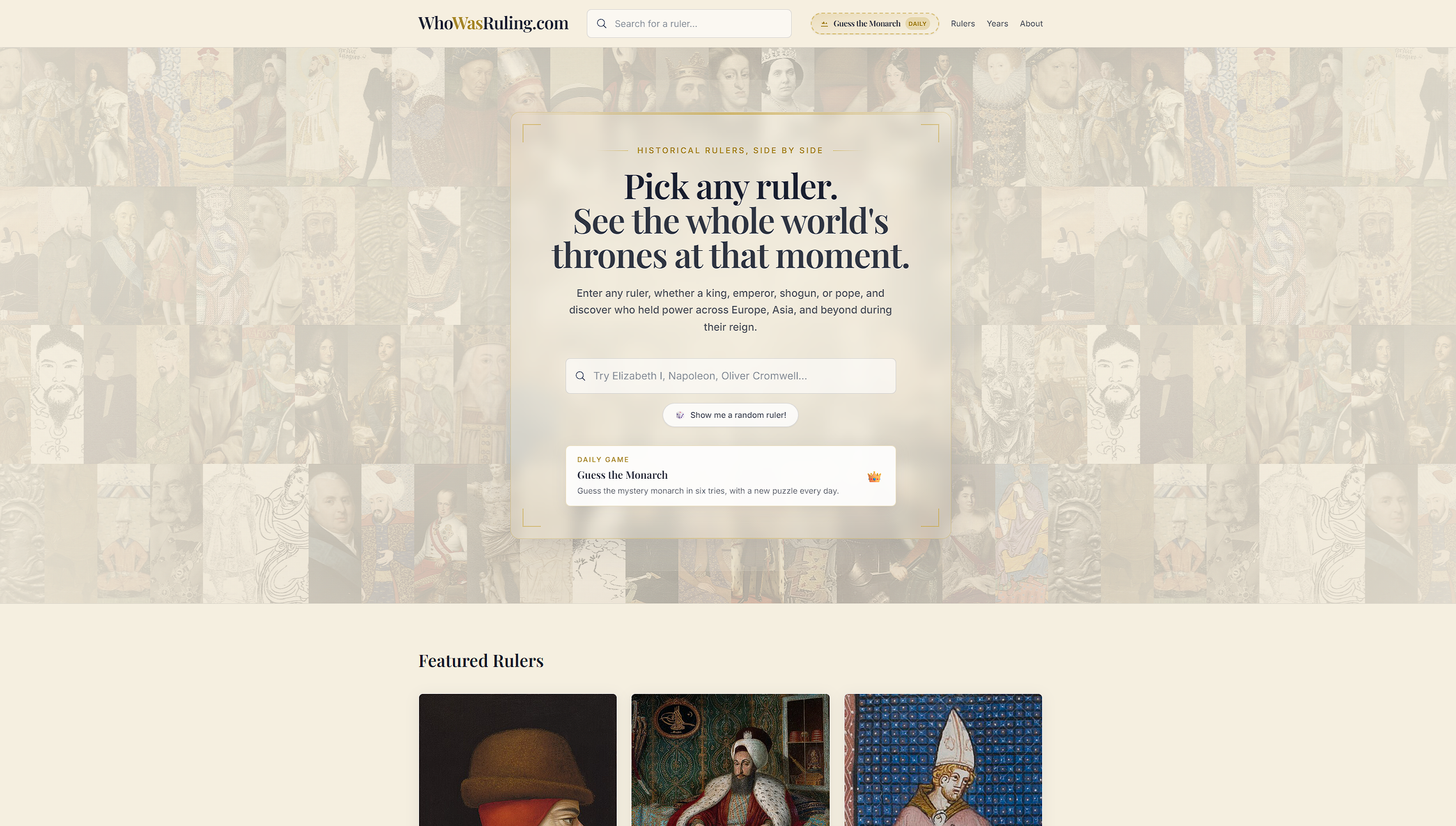
The homepage leads with one promise: pick any ruler and see the world's thrones at that moment, backed by search, featured profiles, and a daily game teaser.
Homepage with portrait collage, search, random ruler, and daily puzzle entry.
Ruler profiles
Individual pages combine portrait, reign dates, biography, predecessor and successor navigation, and the synchronised world view below the fold.
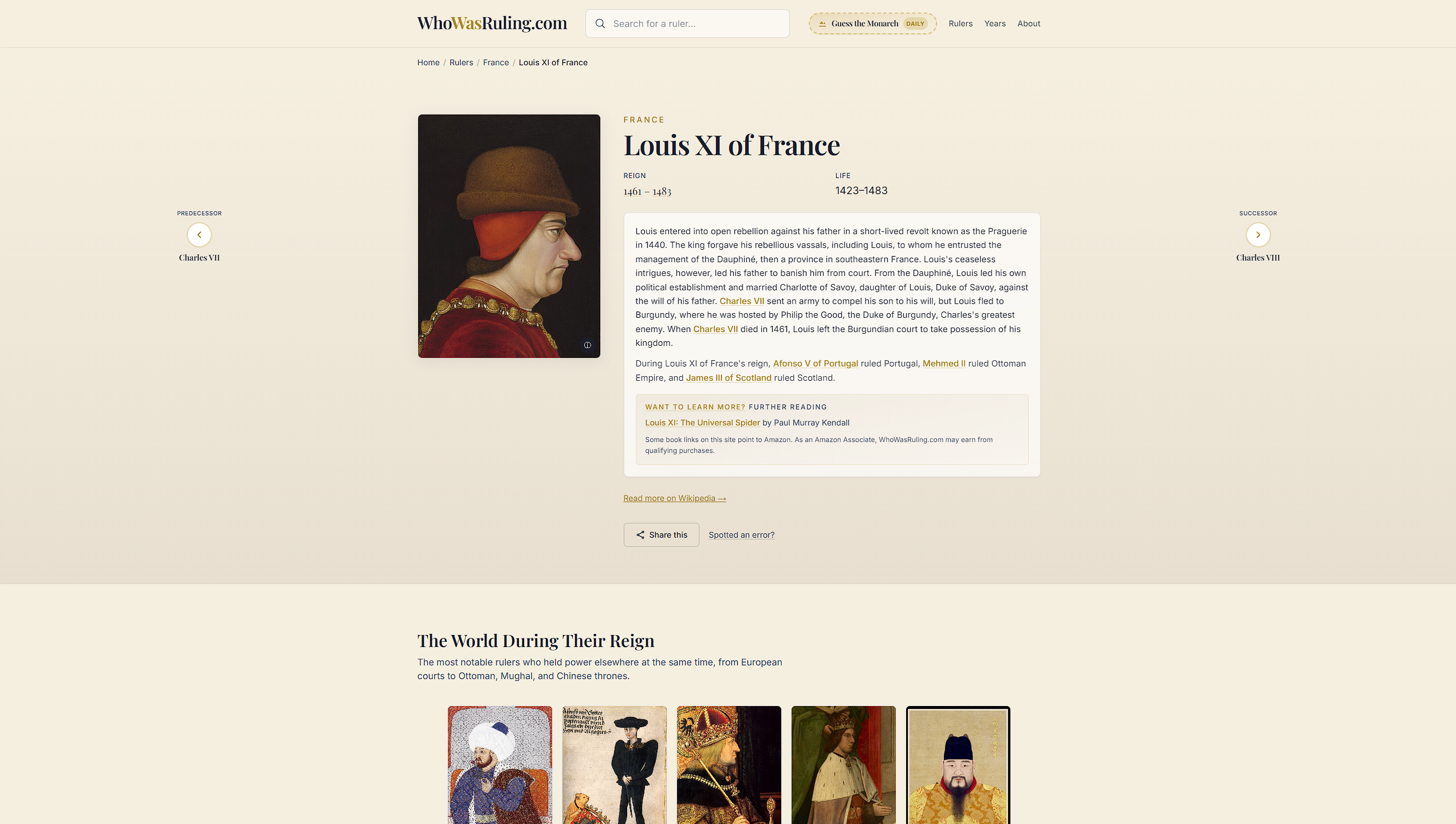
Ruler profile with reign dates, biography, and predecessor/successor navigation.
World synchronised
The signature view: contemporary rulers across Ottoman, Mughal, Chinese, European, and other thrones during the same reign.
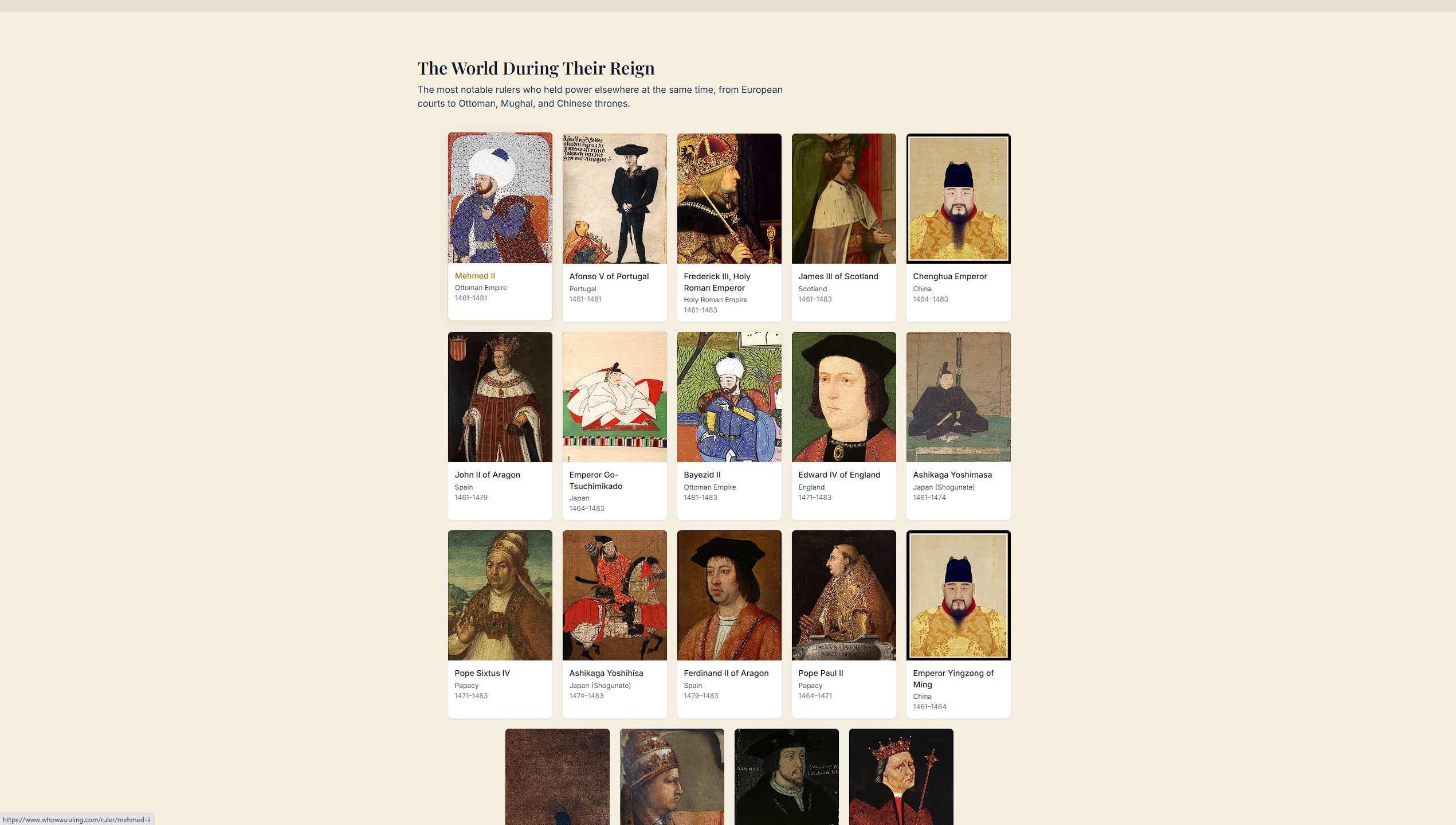
Contemporary rulers across world powers during a single reign.
Browse by year
A year picker with century shortcuts lets visitors jump to any moment (here, 1483) and see every throne active that year.
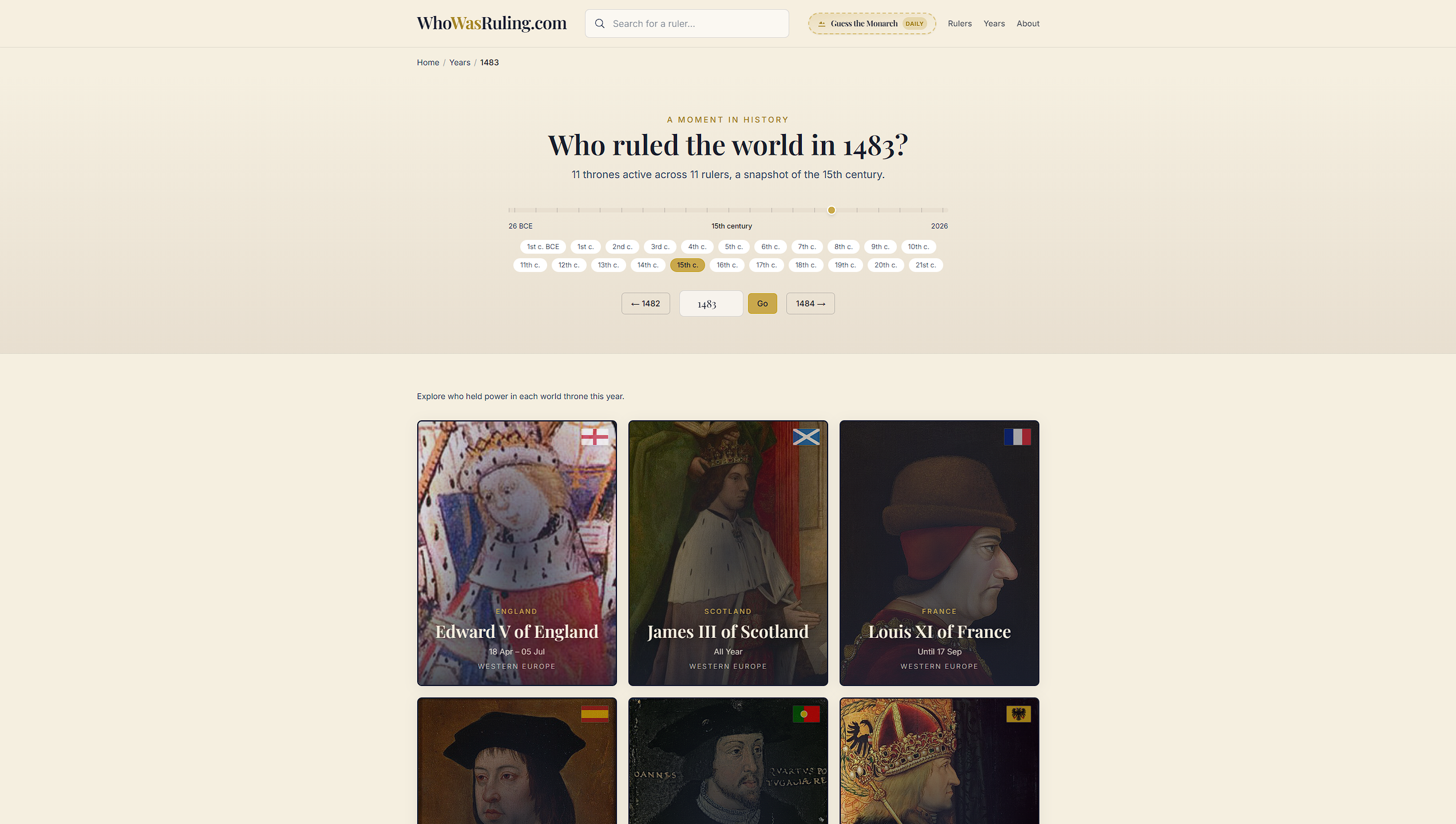
Year browser with century picker and throne cards for 1483.
Rulers index
Nineteen world powers, from England and France to the Ottomans and Mughal Empire, each with a browsable dynasty of rulers.
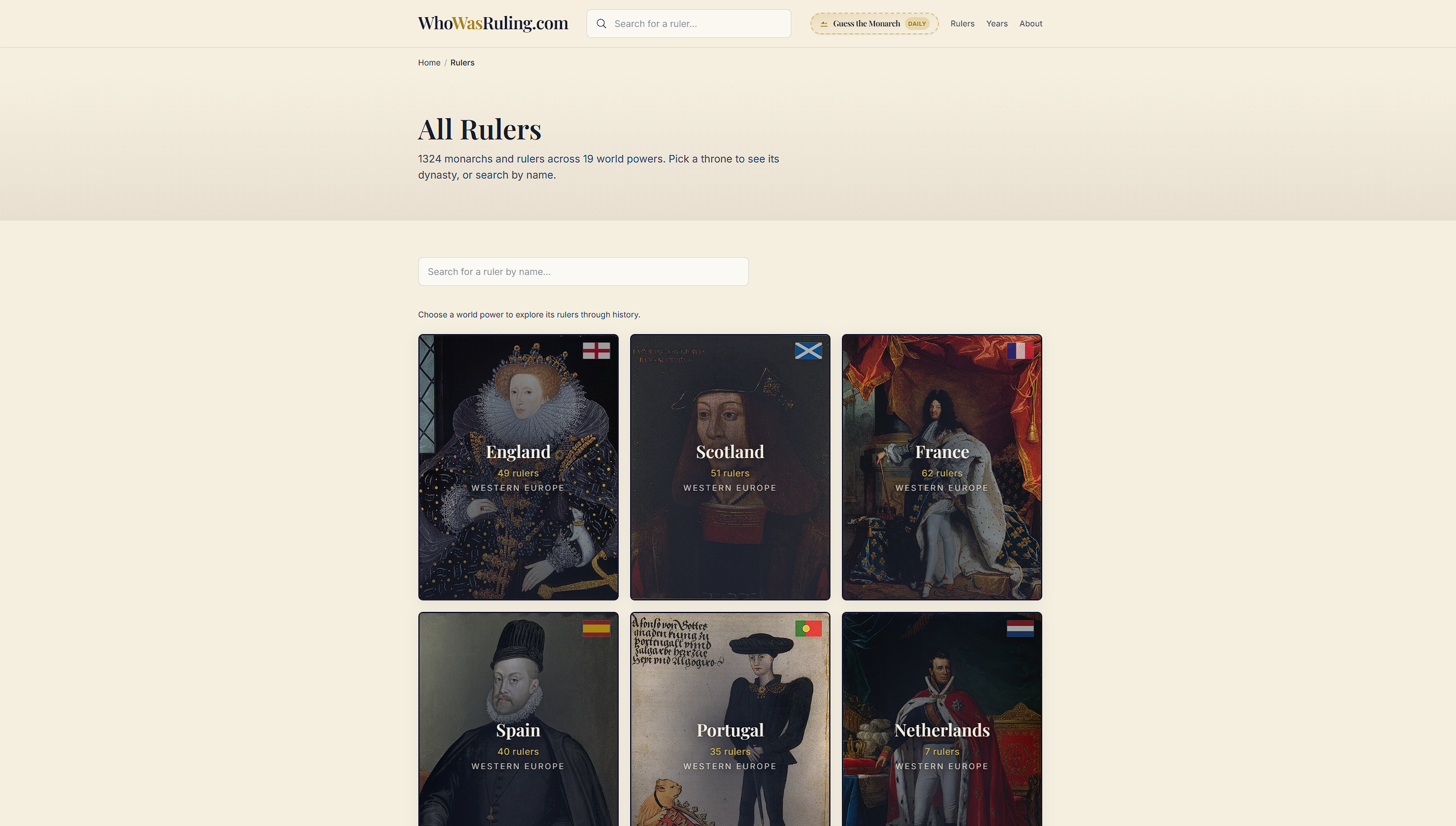
World power cards covering 1,324 rulers across 19 regions.
Daily game
Guess the Monarch works like a daily puzzle with six tries, progressive clues, and practice mode, building habit without compromising the reference experience.
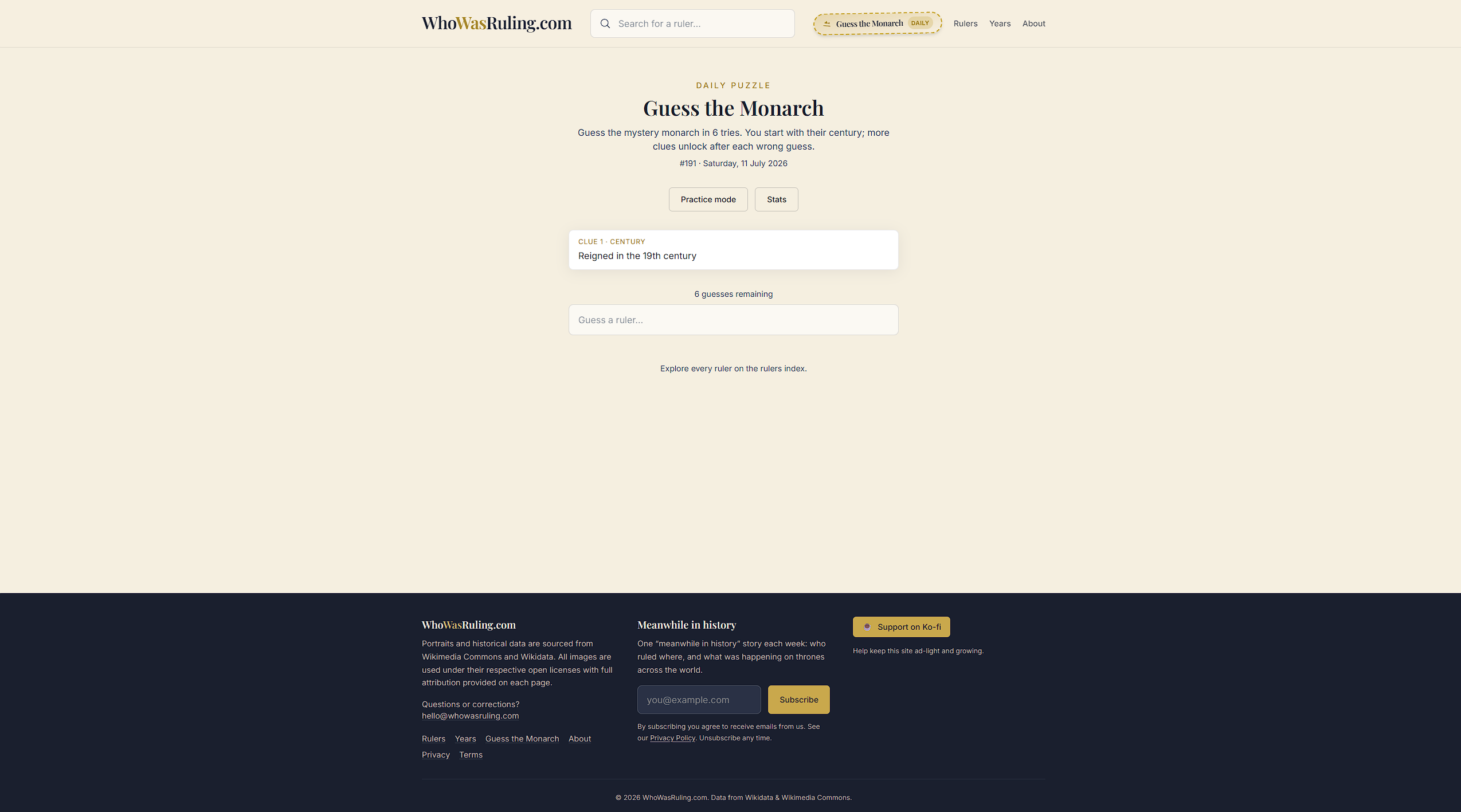
Daily puzzle with progressive clues and practice mode.
Depth & reading
Editorial layers (curated book recommendations, newsletter signup, and open-data attribution) sit alongside the reference tool.
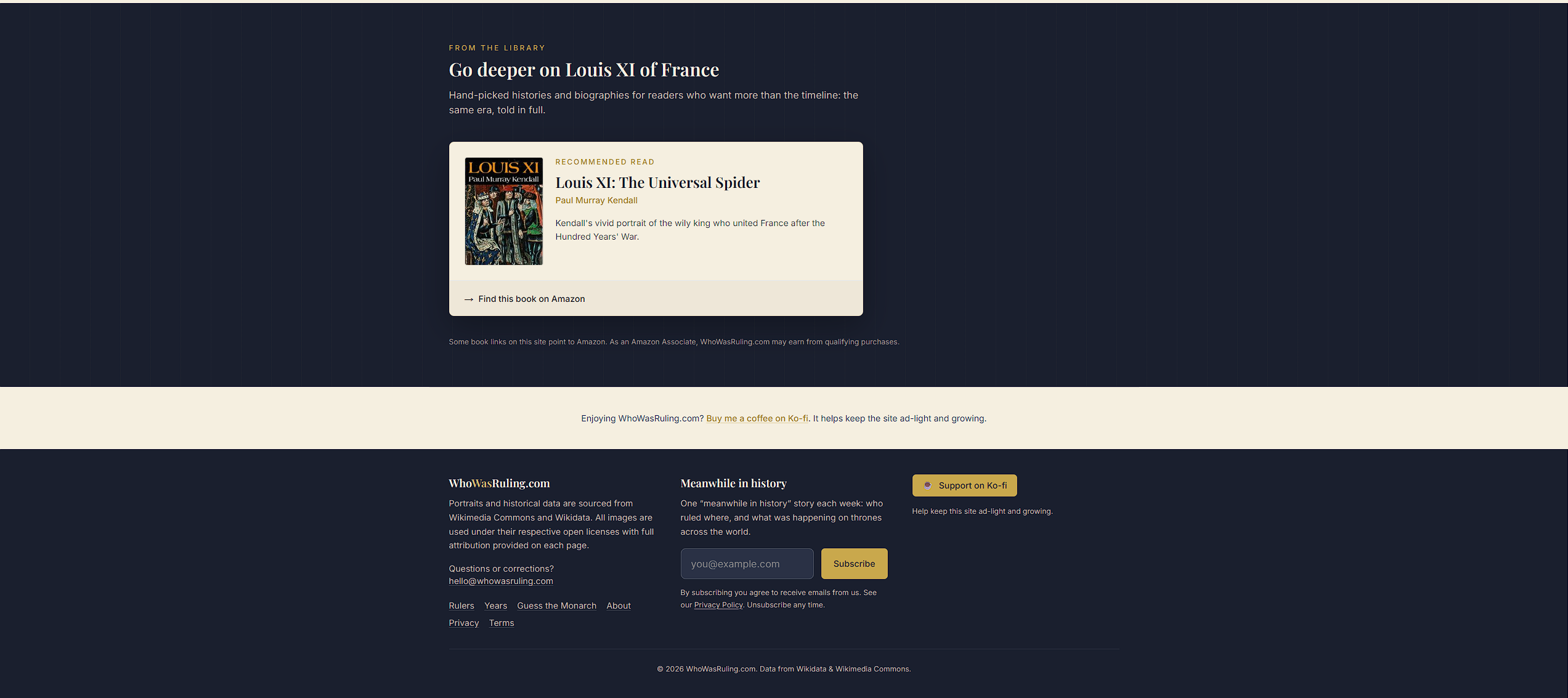
Curated reading recommendations and newsletter signup.
The challenge
History online is usually siloed: one Wikipedia article per ruler, one country at a time. There was no fast way to see the whole world's thrones aligned to a single reign or year.
The approach
The product was built around one mental model: pick a ruler or year, then see every notable throne at that moment. Open data from Wikidata and Wikimedia Commons powers the portraits and timelines, with editorial layers (reading recommendations, newsletter, and a daily game) to bring people back.
Key decisions
Results
- •Live platform indexing 1,300+ rulers across 19 world powers
- •Synchronised world view on every ruler profile and year page
- •Daily puzzle game with progressive clues
- •Newsletter and reading recommendations layered on top of reference content
My role
- •Product design & UX
- •Full-stack development
- •Data modelling & Wikidata integration
- •Launch & ongoing iteration
More work
sheffieldscene.co.uk
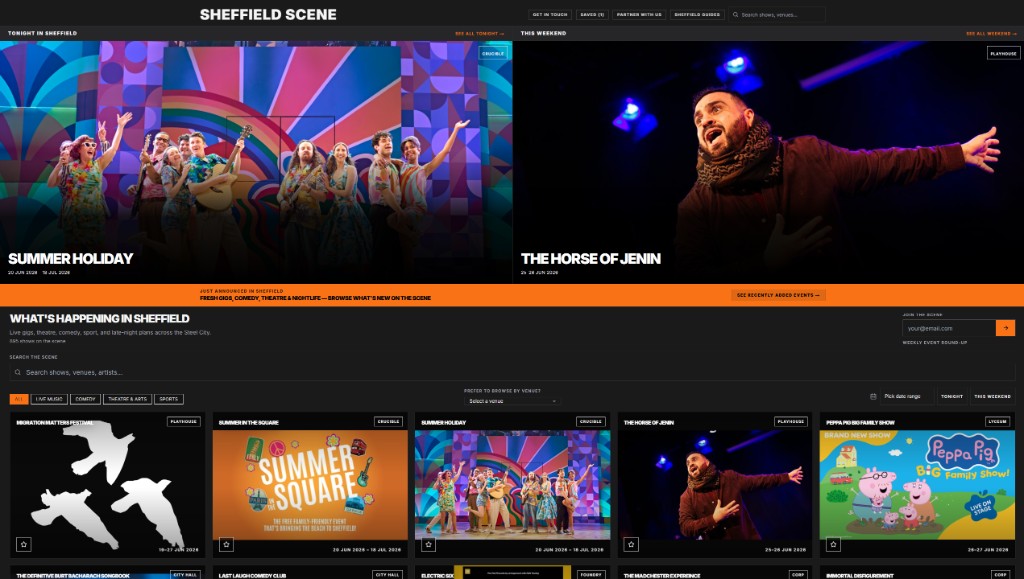
Custom build
Sheffield Scene
A local events discovery platform for what's on in Sheffield, covering theatre, gigs, comedy, and nightlife.
dalix-studios.co.uk/scope
Filter by date, venue, or category
Built for repeat use, not a flat calendar nobody returns to.
Event results
Get the weekend guide
Editorial picks delivered every Thursday.
Internal product
Scope
An AI project studio that turns a plain-language brief into platform advice, sitemap, wireframes, and phased delivery, built to show how Dalix thinks before a project starts.
zeusvintage.co.uk
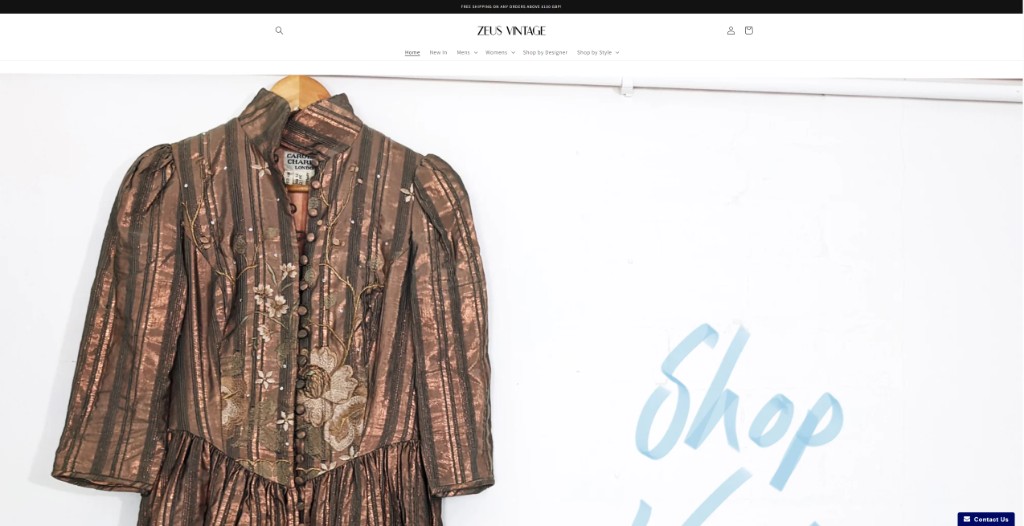
Shopify
Zeus Vintage
Luxury vintage clothing ecommerce for a Sheffield-based curator of designer fashion from the 1950s to the early 2000s.
goldenavenue.co.uk
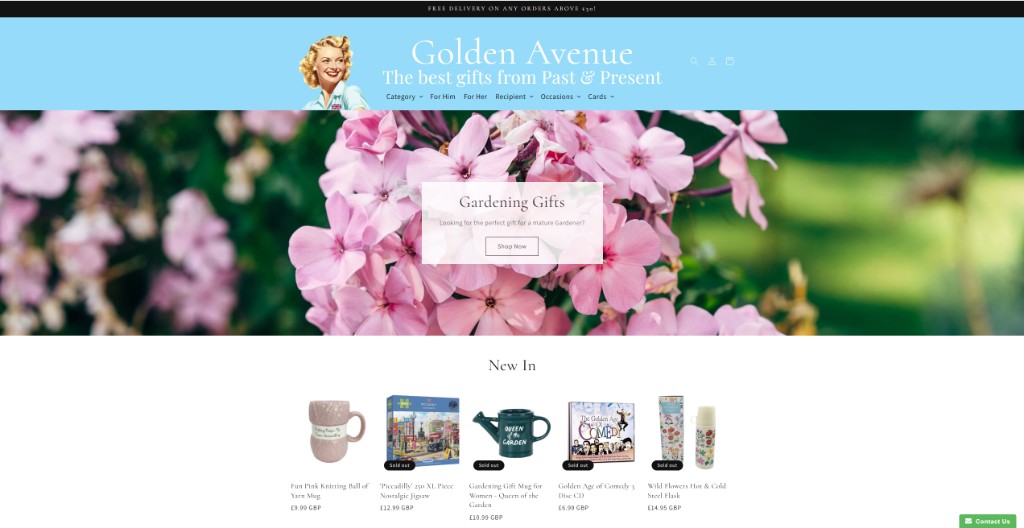
Shopify
Golden Avenue
A niche gift shop built around how people actually buy for older relatives: by recipient, occasion, and interest.